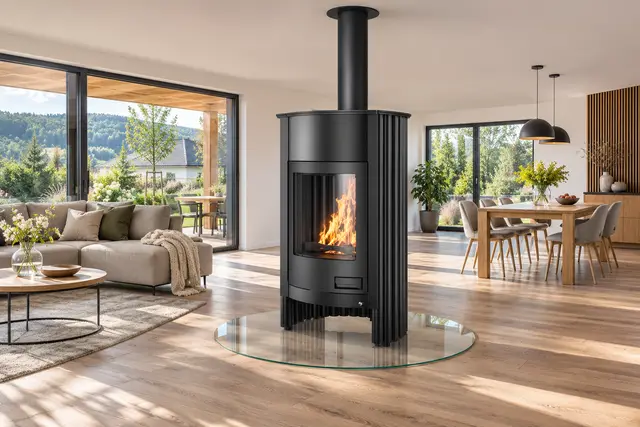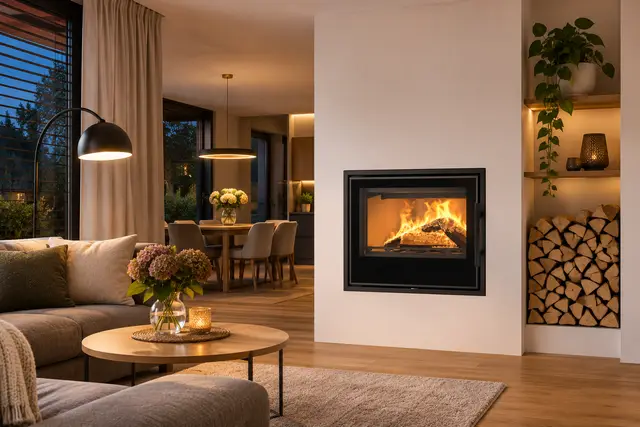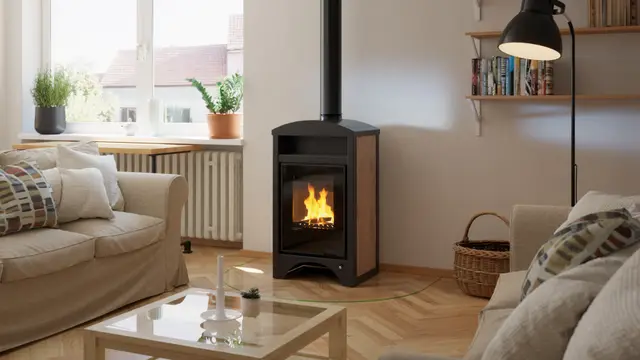
Floor plate for a stove: glass or steel?
A floor plate protects the floor from hot embers and heat. Which material to choose, how big it should be, and where glass or steel suits best.
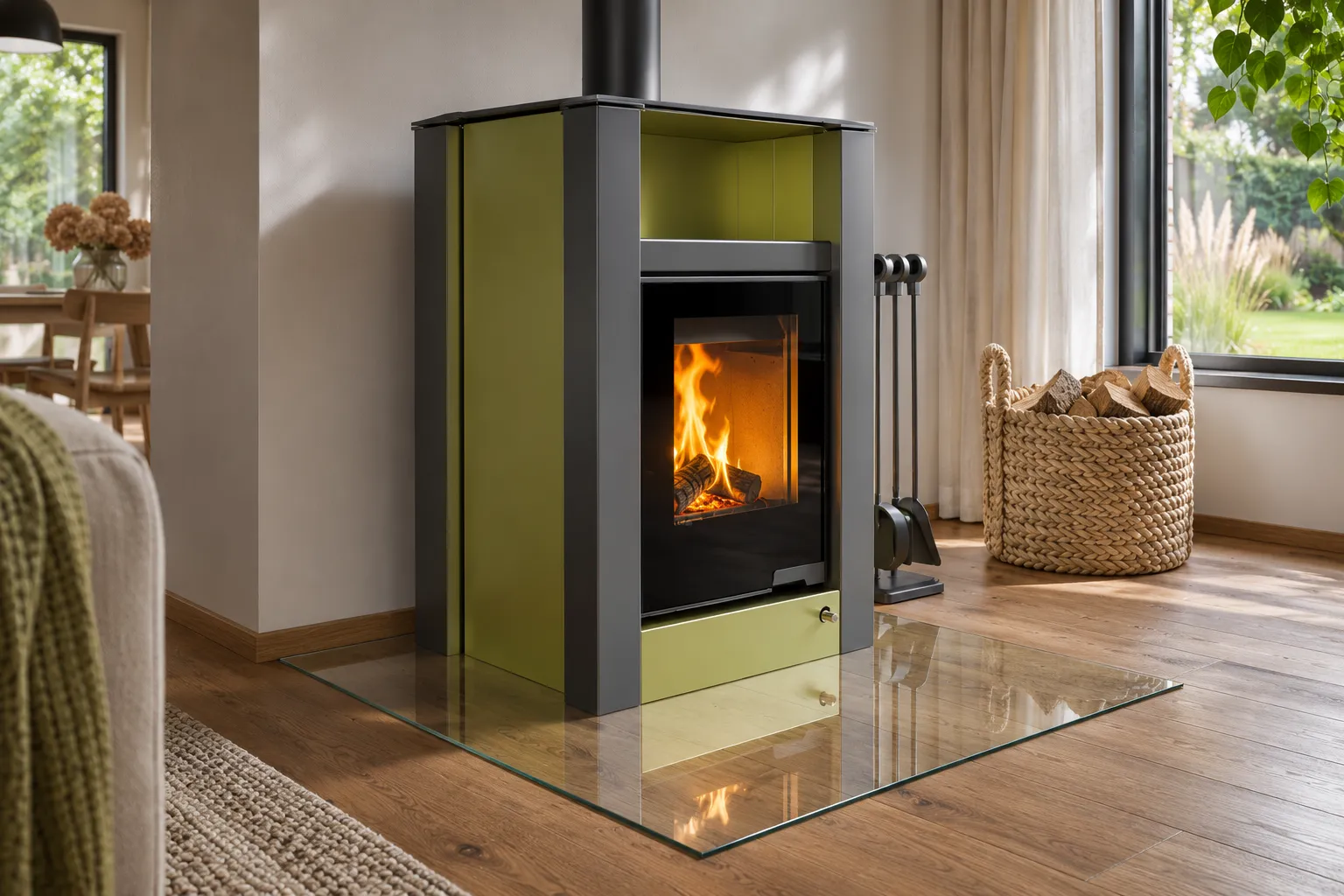
If the stove stands on a combustible floor (wood, laminate, vinyl, carpet), it needs a non-combustible floor plate underneath. It protects the floor from hot embers that fall out when you refuel, and from the stove’s heat.
Glass floor plate
A glass floor plate is made of toughened safety glass that withstands both the heat and the weight of the stove. It is almost invisible, so both the floor and the stove stand out.
- an elegant look for modern interiors;
- easy to look after – just wipe it clean;
- various shapes: rectangle, square, trapezium, quarter circle and oval;
- 6 and 8 mm thick, depending on the size and weight of the stove.
Steel floor plate
A steel floor plate is a steel sheet with a surface finish. It is robust and more affordable.
- it can withstand rougher treatment;
- it suits holiday cottages, workshops and rustic stoves;
- the surface may wear over time.
How big should the floor plate be?
The minimum overhangs are set by the stove’s manual and the relevant standard. Typically you allow at least 30 cm in front of the door and 10–15 cm at the sides. If you often load large logs or the door opens to the side, choose a larger size.
Glass or steel?
| Glass | Steel | |
|---|---|---|
| Look | discreet, modern | functional, traditional |
| Durability | high | very high |
| Price | higher | lower |
| Best for | living rooms | holiday cottages, workshops |
Glass plates also go well with accessories, such as silicone edging tape for the glass.
Not sure? Write or call us – we’ll advise you straight from the factory. You’ll find our contact details here.