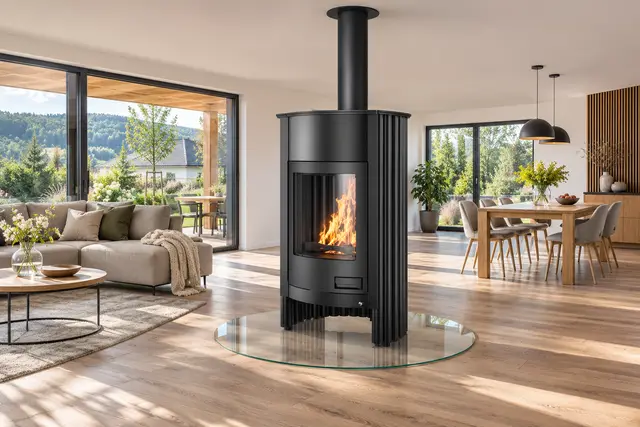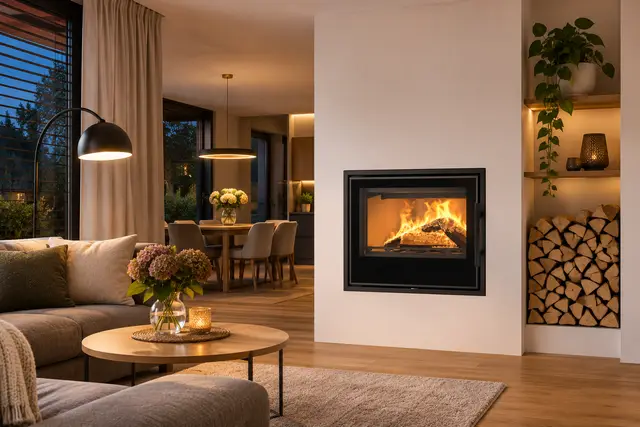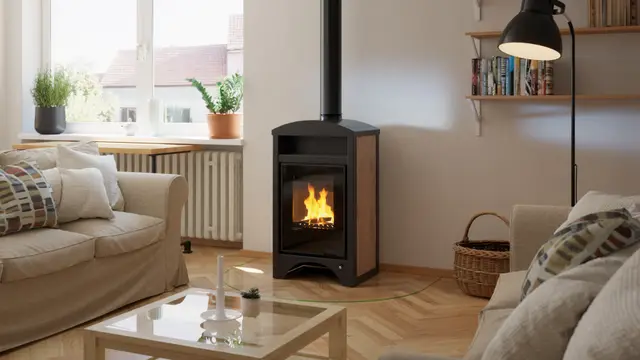
What does "TWO-STAGE COMBUSTION" mean?
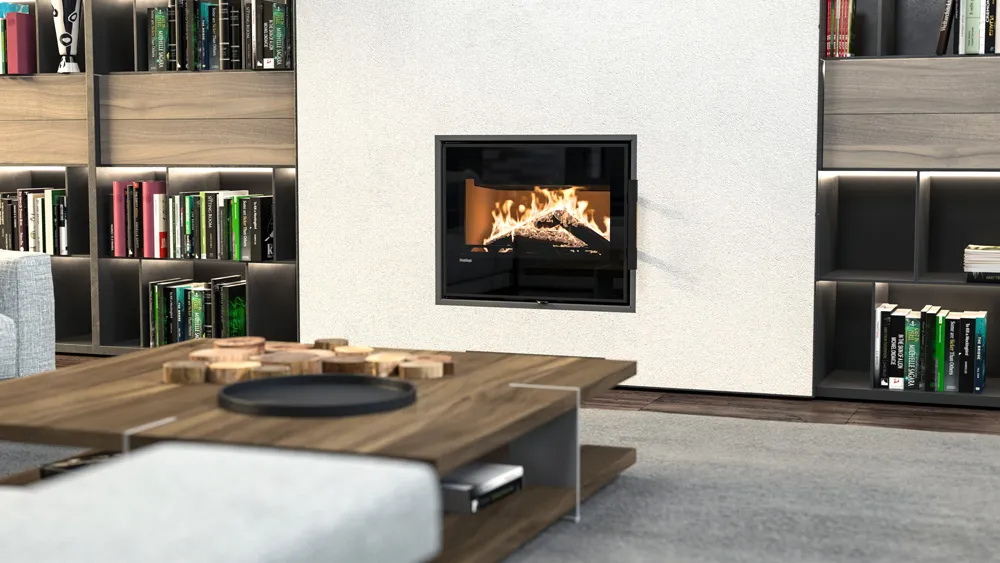
How two-stage combustion works
Combustion in the firebox takes place in two phases:
Primary combustion – solid wood particles
The first phase takes place directly on the grate. This is where primary air flows in, which is essential for lighting and burning the wood. Primary combustion is fairly intense but not completely clean — which is exactly why a second stage is needed.
Secondary combustion – gaseous particles The result is higher efficiency, longer burn times, cleaner glass and lower emissions. |

Where so-called tertiary air comes into the system
The term tertiary air is often used by manufacturers and retailers, but it means something different from what you might think.
Tertiary air is an additional air supply, usually entering from the back of the combustion chamber. Its job is to support the burning of gases — in other words, to boost secondary combustion, not to create a third stage of combustion.
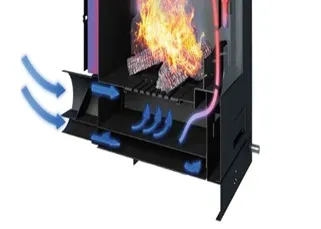 | A common misconception: "tertiary combustion" doesn't exist Many retailers and manufacturers wrongly use the term "tertiary combustion". It is, however, incorrect. The correct terminology is therefore: – Primary combustion – solid parts of the wood |
This distinction matters especially when choosing a stove or talking to specialists, because the wrong terminology can lead to a misunderstanding of how the air supply works.
HS Flamingo two-stage combustion is designed to:
– rely on preheated secondary air
– optimise its flow
– ensure a stable temperature in the upper part of the chamber
– support long, clean burning of wood
– minimise tar build-up
– keep the glass clean thanks to the secondary-air airwash
It is precisely the well-designed airflow in the firebox that sets quality HS Flamingo products apart from ordinary stoves on the market.
What two-stage combustion means for you– higher efficiency and a longer burn from each load of wood As a result, you benefit not only from lower running costs but also from more comfortable, cleaner heating. | 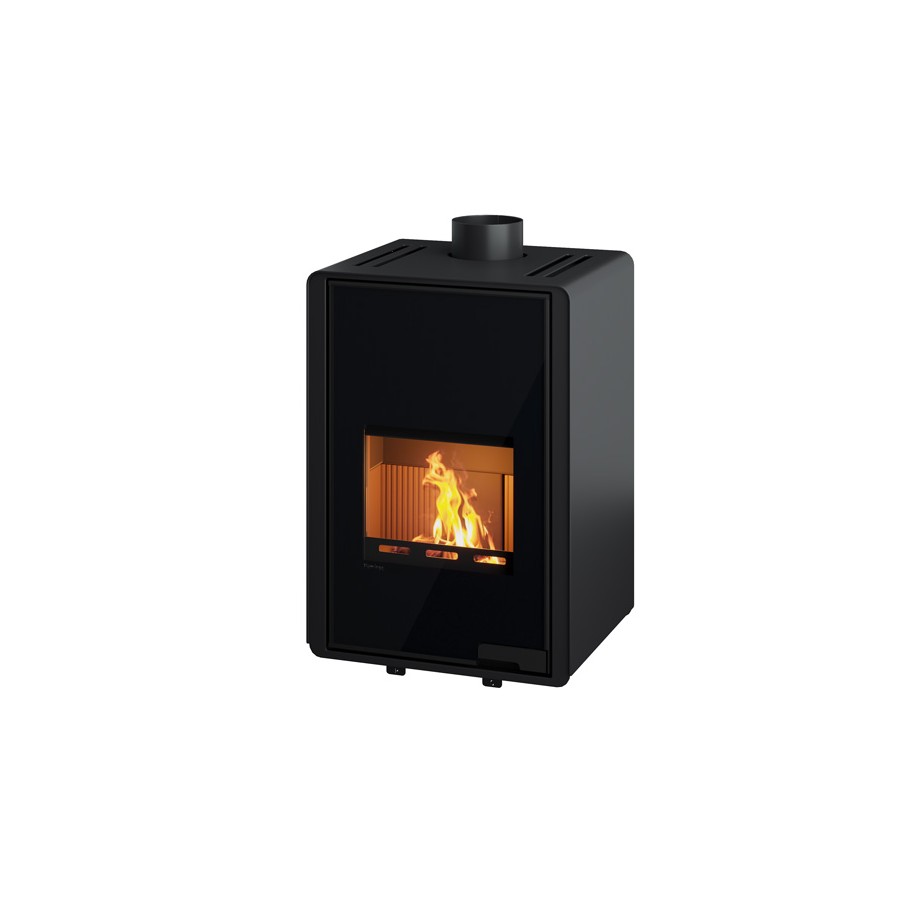 |
Summary
Two-stage combustion is the key process behind modern, clean and economical burning.
Whether used in HS Flamingo stoves or inserts, it always involves:
- Primary combustion – burning of solid particles
- Secondary combustion – burning of gaseous particles
The term "tertiary combustion" is misleading; the correct term is tertiary air supply, which supports secondary combustion but doesn't create a new stage of burning.
Thanks to the engineering of the airflow in the firebox, HS Flamingo products achieve maximum efficiency, cleanliness and long burn times.